
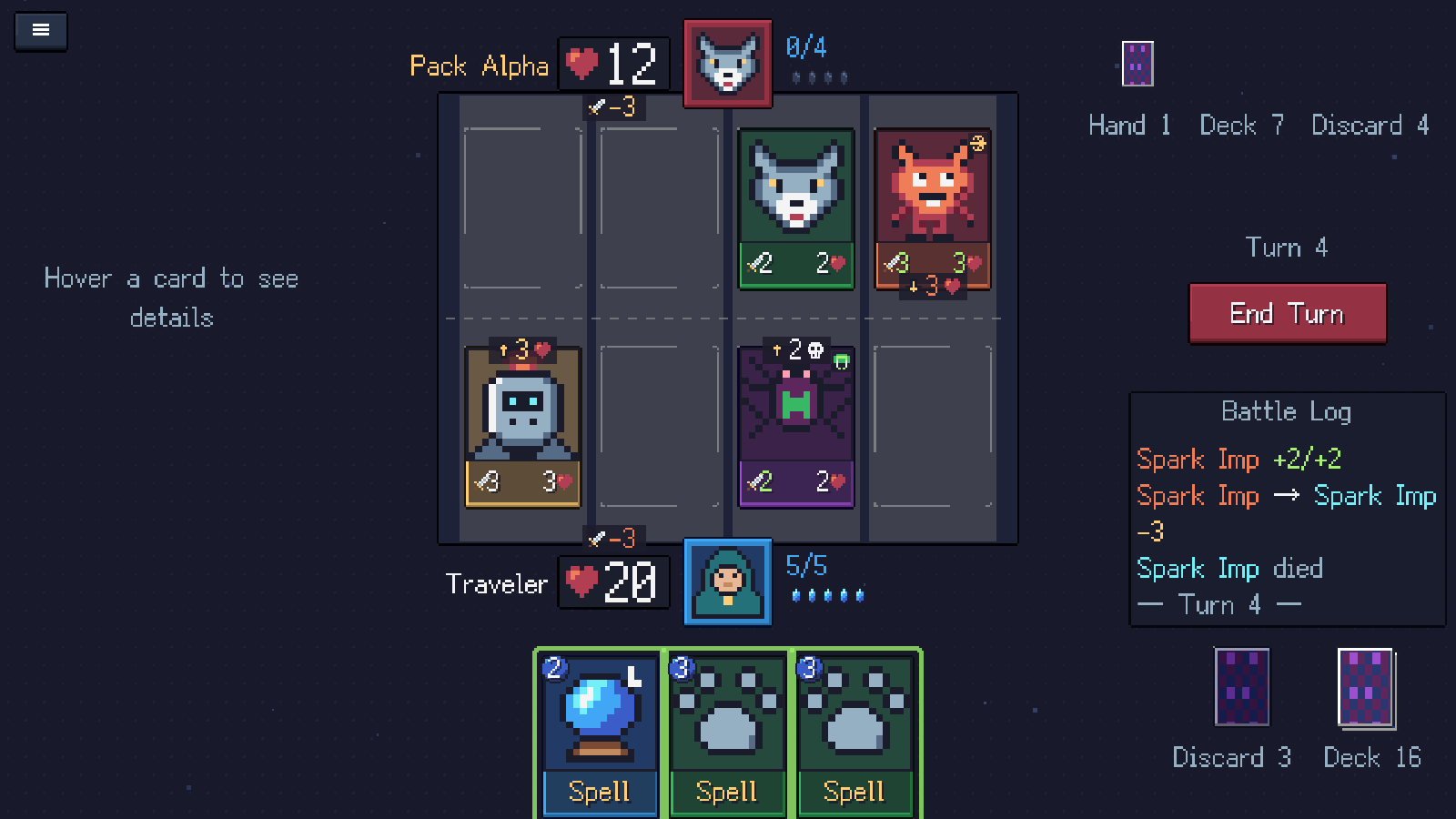
If you enjoy Magic: The Gathering’s creatures, spells and deck construction, Cardfarer offers a compact single-player card game to explore between other games. It has its own card pool, automatic energy and four-lane battlefield. You can play free in a desktop browser or download the Windows version.
This introduction focuses on the rules to relearn first. Cardfarer is a separate game by Jellume, with AI Campaign battles and a roguelike Expedition mode. It does not implement Magic’s rules, cards or multiplayer formats.
Your deck has no land cards
Magic’s official introduction explains lands as a source of mana. In Cardfarer, energy grows automatically: your maximum normally increases by one each turn, up to 8, and your available energy refills at the start of your turn. Equipment can modify the usual energy rules.
This removes the need to choose a land count or draw lands to develop your resources. It does not remove the need for a useful cost curve. Expensive cards can still sit in your hand while an enemy threatens an open lane, so affordable creatures and answers remain valuable.
It also does not remove randomness. Decks are shuffled, and the cards you draw still affect the options available on a turn.
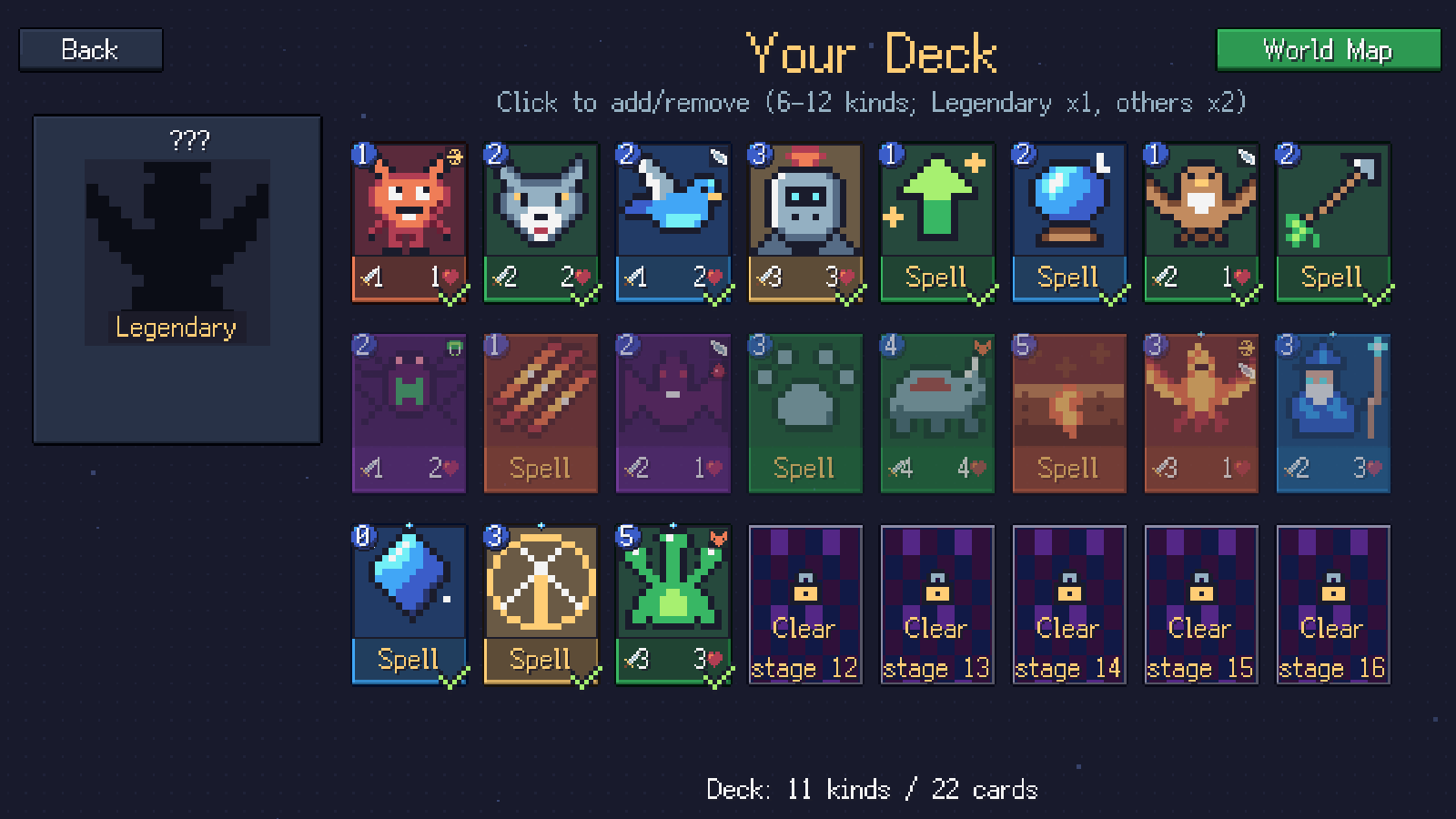
In-game capture: the deck editor contains creatures and spells at different costs, with no land cards to include. Click to view full size.
Placement determines the matchup
Magic uses declared attackers and blockers. Cardfarer instead gives each side four fixed creature positions. Your creature attacks the opposing position in its own lane. A creature in a neighbouring lane cannot move across to block that attack for its hero.
When the opposing position is empty, an attack hits the enemy hero. When a defender is present, the attack normally hits that creature. Flying and other keywords can change the result.
Treat placement as part of playing the card: is this a defender for a dangerous lane, or a threat aimed at an opening? A creature’s numbers tell you only part of its job; its position tells you where it will do that job.
Attacks happen when you end your turn
After you finish playing cards, End Turn resolves the attacks of your ready creatures. Most newly summoned creatures must wait until your next turn to attack. Haste is an exception.
The defending creature does not automatically deal damage back during an attack. A surviving defender may attack when its own side ends a turn. This is worth learning before you evaluate a trade using habits from another game.
Cardfarer also has no Magic-style stack or priority exchanges. Make your spell and placement decisions before ending your turn, then use the attack preview and battle log to follow the result. The beginner combat guide includes a worked example.
Familiar keyword ideas still need their own rules
You may recognise names such as Flying, Haste and Trample from Magic’s keyword glossary. Read Cardfarer’s card text for their exact behaviour here:
- Flying: bypasses a non-flying creature in the opposing lane to hit the hero.
- Haste: allows an attack on the turn the creature arrives.
- Trample: sends excess damage beyond a defeated defender to its hero.
- Lifesteal: damage dealt heals your hero.
- Venom: a creature damaged by the attacker is destroyed.
The useful habit to carry over is reading interactions carefully. The details of blocking, responses and combat from Magic should be replaced with what Cardfarer’s board actually shows.
Which single-player mode should you try?
Choose Campaign if you want to prepare a deck and take it through a sequence of opponents. It has 16 duels across three regions, and stage rewards expand your available collection. The deck construction guide explains how selecting card kinds works.
Choose Expedition after defeating the Stone Colossus if you want a run that changes through rewards, equipment and a branching map. Its starting deck is class-based rather than imported from the Campaign editor. If that is your preferred style, see the Expedition introduction for Dungeon Run fans.
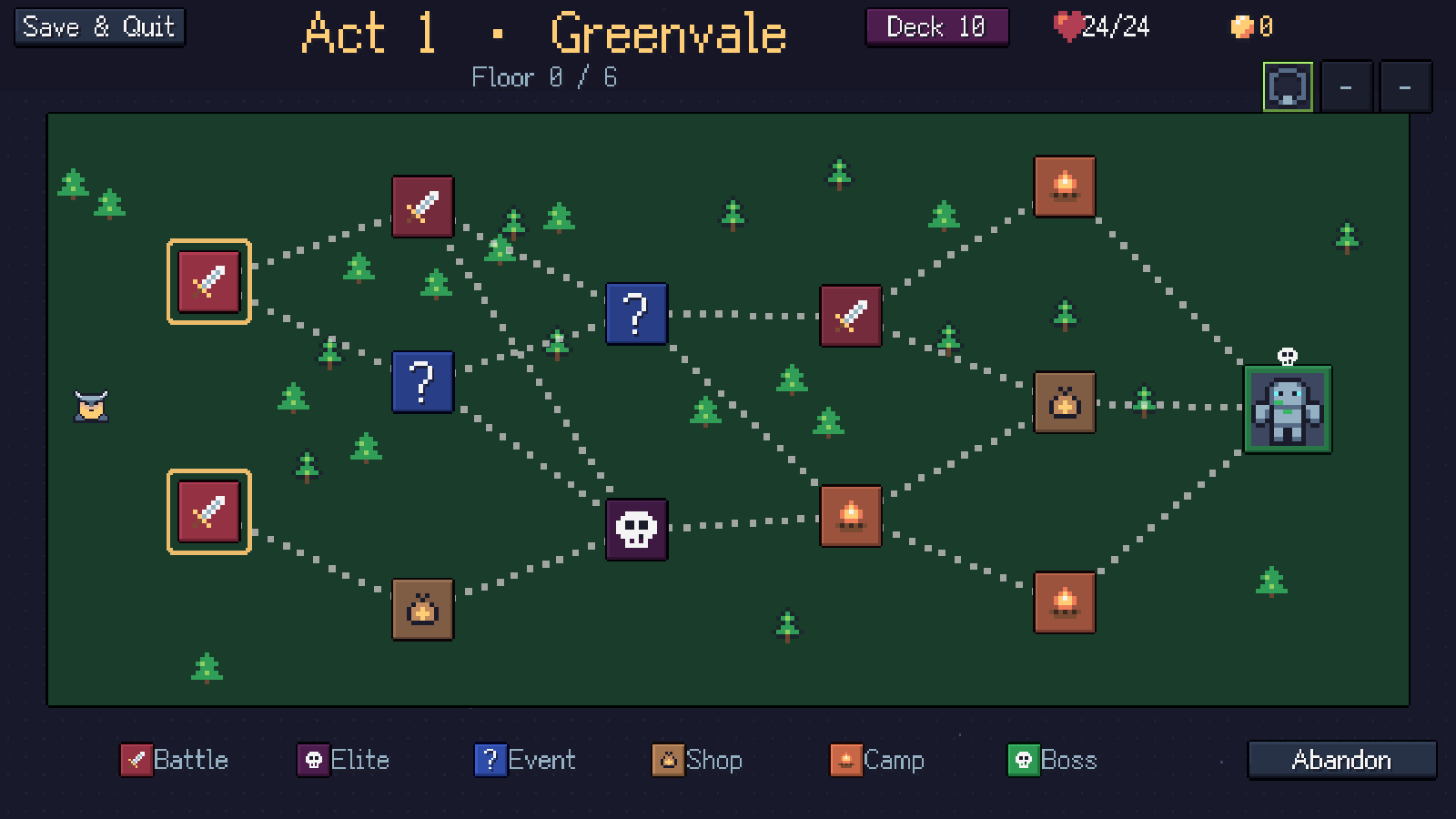
In-game capture: Expedition tracks the run deck, health and gold above a branching map of encounters. Click to view full size.
A useful first-session goal
Try one Campaign duel and focus on predicting the four lane outcomes before pressing End Turn. Then check which prediction was wrong: a sleeping creature, an empty lane, or a keyword you missed. That gives your next deck adjustment a concrete purpose.
Start Cardfarer on itch.io, read the browser and save guide, or view the game overview. You can judge its particular style of single-player combat without buying into another multiplayer collection.