
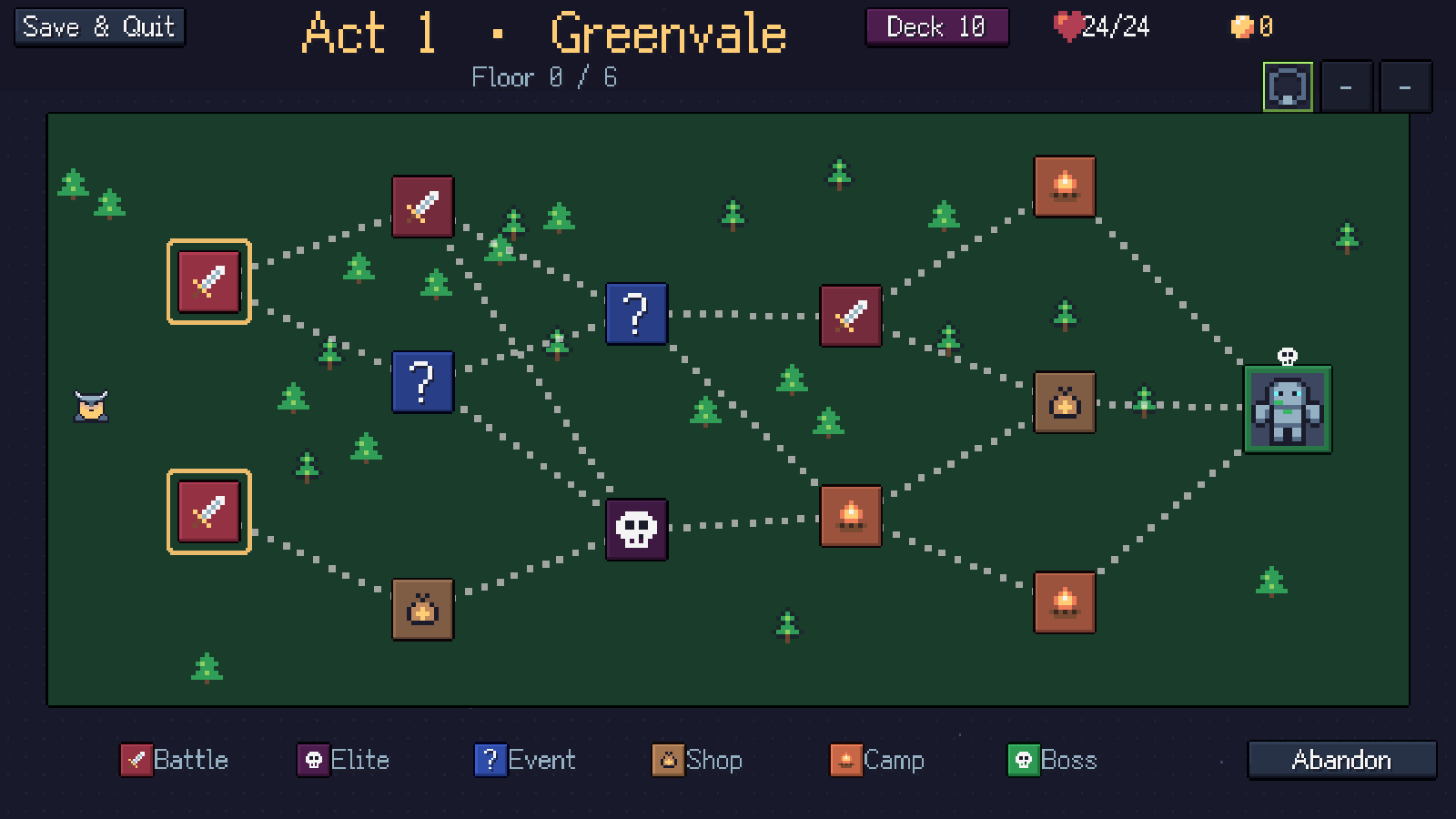
Looking for a game like Hearthstone Dungeon Run? Cardfarer is Jellume’s free single-player pixel-art card battler, and its Expedition mode is built around taking a changing deck through a run of encounters. Choose a hero, collect cards and equipment, and decide which branches of the map to follow.
You can play Cardfarer in a desktop browser or download the Windows version from the same page. This introduction explains our own game so you can decide whether its version of a card adventure fits what you enjoy.
What might a Dungeon Run fan enjoy here?
Blizzard’s original Dungeon Run introduction describes starting with a small class deck and strengthening it through encounters, card choices and treasures. That gradual change is the part to look for when considering Cardfarer.
In Expedition, a reward is a decision about the deck you have right now. An affordable creature might fill a gap in your opening turns. A damage spell might solve a problem that your current board cannot. An equipment effect might make you reconsider which creatures you want to add next.
The appeal is in watching those choices accumulate: the deck reaching the next boss has a history of your decisions behind it.
How does an Expedition work?
An Expedition crosses three acts on a branching map. Nodes include battles, elites, events, shops, campfires and bosses. Your hero class supplies the starting deck; rewards and encounters change it during the run.
You choose among Mage, Warrior and Ranger. Their starting cards support different approaches, from spells and card draw to a sturdy front line or flying threats. Equipment adds another layer to how those cards behave.
Health also matters between ordinary battles. A difficult fight may leave you choosing a safer route toward recovery. At a campfire, you can weigh healing against training a creature card. A useful reward is therefore one that helps the next few encounters, as well as the current deck on paper.
How is the combat different?
Cardfarer uses four fixed lanes. You place a creature into a lane, and when you end your turn, your ready creatures attack the opposing position in their own lanes. An empty opposing position means damage to the enemy hero.
You do not select an arbitrary attack target for each creature. Placement, readiness and keywords determine the attack. Most new creatures must wait until your next turn to attack; Haste lets them attack on arrival. Flying can bypass a ground defender, while Trample can push excess damage through one.
That changes the planning question: which lane will this creature influence, and will it be ready at the right time? The lane and combat guide walks through the rules in more detail.
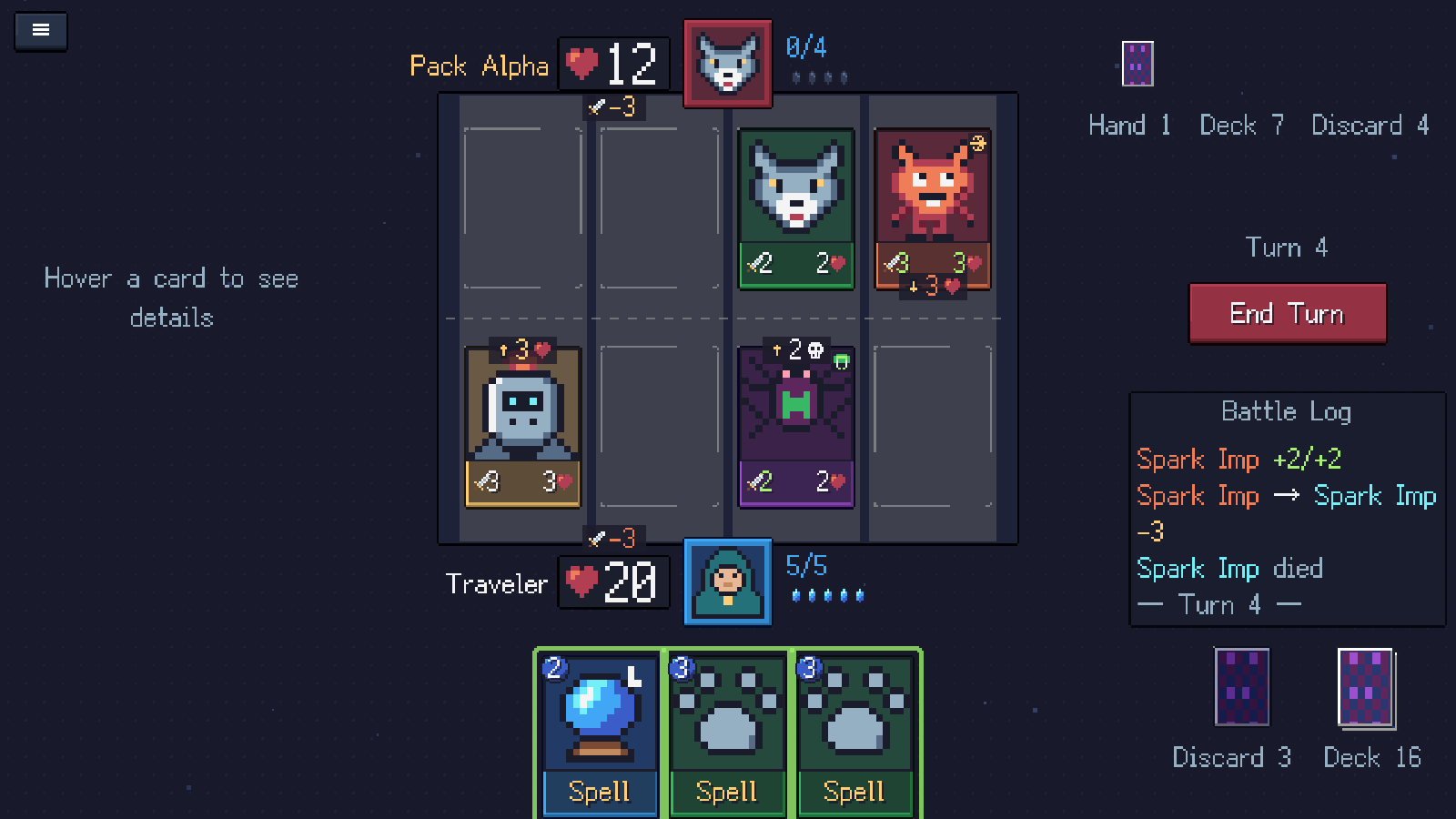
In-game capture: creature placement creates four fixed matchups. The End Turn button and damage previews help you read the next combat. Click to view full size.
How do I reach Expedition?
Begin with Campaign and defeat the Stone Colossus, the boss of Greenvale. That unlocks Expedition; you do not have to complete the entire 16-duel Campaign first.
Campaign also gives you room to learn the attack previews before taking on a longer run. Once Expedition is available, choose a class and read your starting equipment. The mode guide explains the differences in progression and route planning.
What if I want to prepare my whole deck beforehand?
Then start with Campaign. Its deck editor lets you choose from the cards you have unlocked before entering battles. Expedition starts with its own class-based deck rather than importing that edited Campaign deck.
These support different moods: Campaign is a place to test a prepared list against a particular encounter; Expedition is a place to adapt as rewards appear. Read the single-player deck construction guide if preparing your deck is the main attraction.
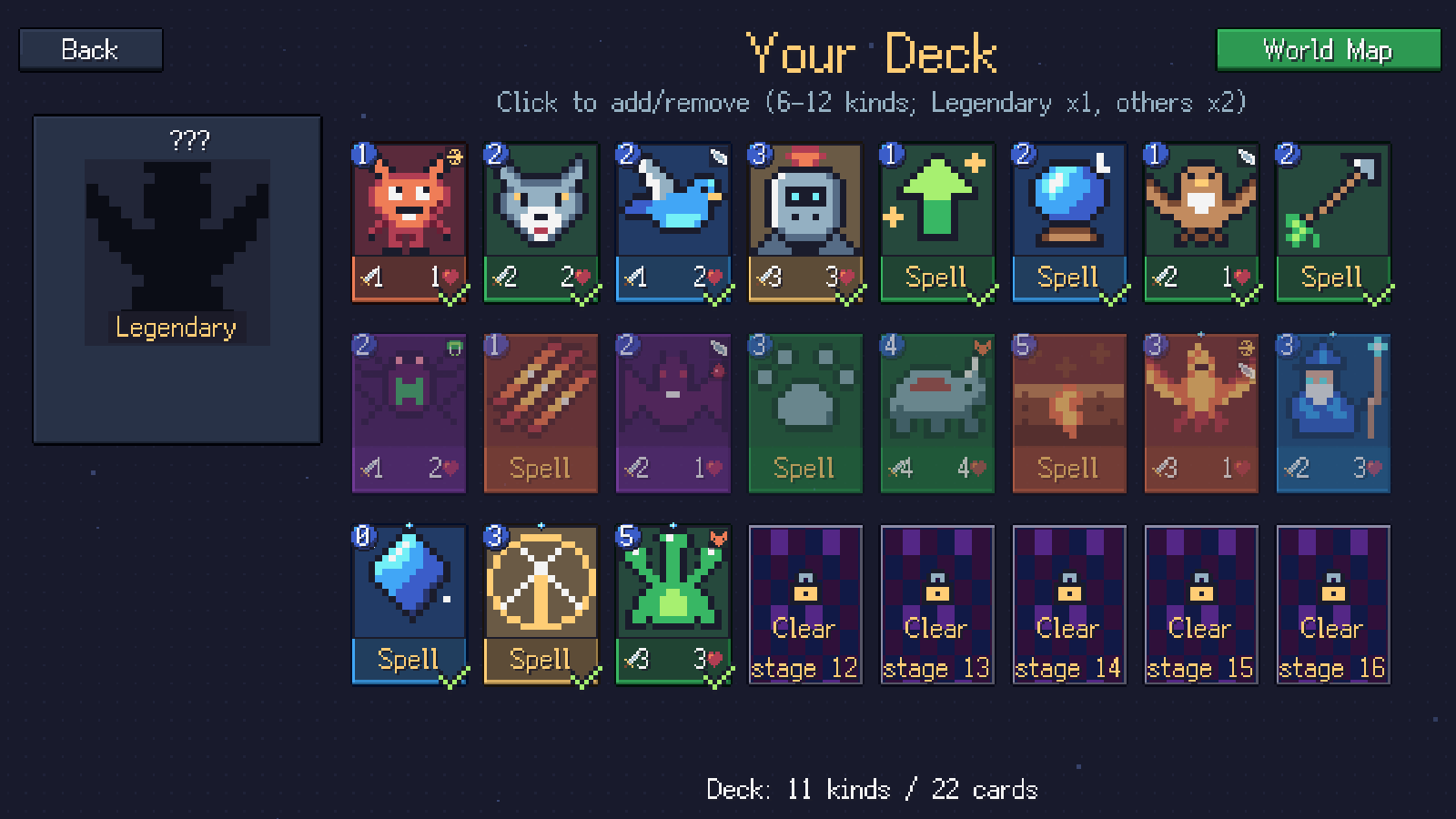
In-game capture: Campaign provides a separate deck editor for players who want to choose their cards before a fight. Click to view full size.
Is Cardfarer a good fit for me?
Try it if you enjoy solo creature-and-spell battles, rewards that change your plan, and a compact pixel-art game you can open in a browser. Expect Cardfarer’s own cards, three hero classes and lane rules. Its current modes are single-player; there is no PvP ladder or Hearthstone card collection to bring across.
The quickest way to judge the combat is to play the first Campaign duel. For controls and save details, use the browser quick start. You can also view gameplay screenshots before beginning.