
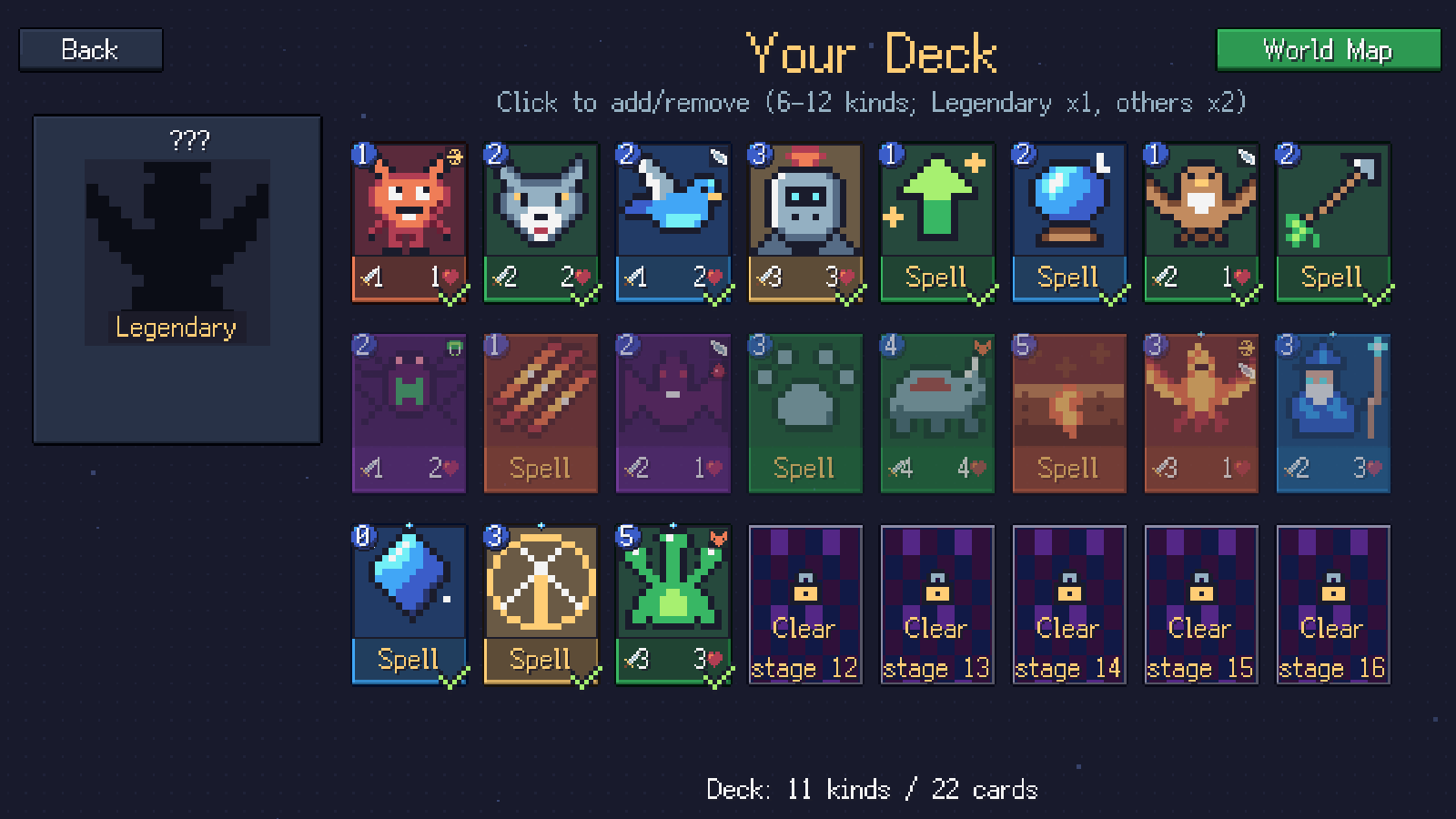
The first useful question in Cardfarer is not “which card has the biggest numbers?” It is “what happens when I end this turn?” Each side has four lanes, and a creature’s lane determines what it can hit. Learning to read those four matchups makes both attacking and defending much easier.
If you have not opened the game yet, the browser quick start covers the play link, controls and saves.
How do the four lanes work?
A ready creature attacks the opposing position in its own lane at the end of its owner’s turn. If an enemy creature occupies that position, the attack hits that creature. If the opposing position is empty, the attack hits the enemy hero.
The defender does not automatically strike back during that attack. It may get its own attack when its owner’s turn ends, provided it survives and is ready. That distinction changes how you should evaluate a trade.
Putting a creature into an empty lane can create direct pressure. Putting it opposite an enemy can protect your hero from that lane’s ordinary attack. A creature in a different lane will not step across to block for you.
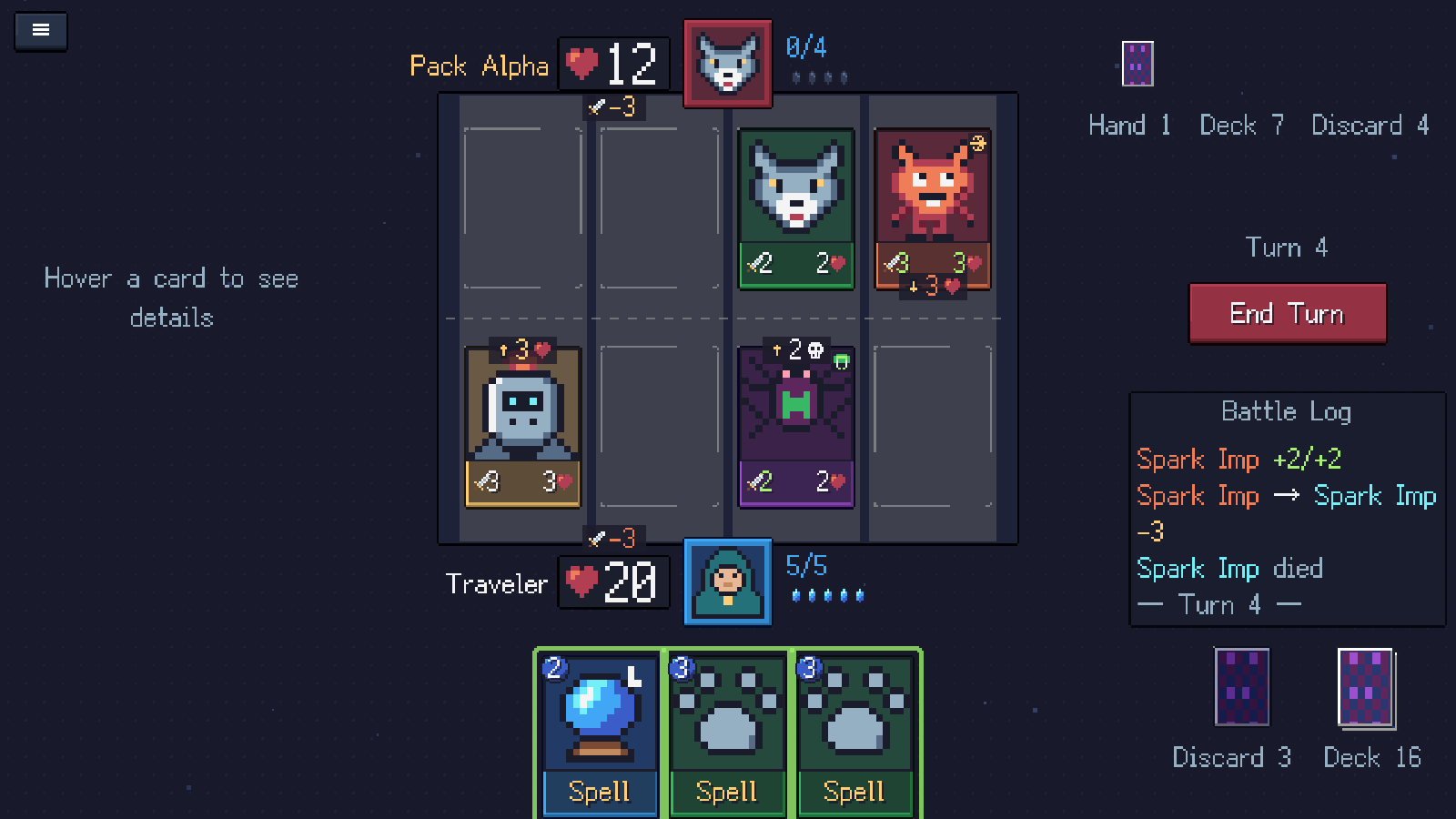
In-game capture: the four lanes occupy the centre, damage previews appear beside the units and heroes, and the battle log sits on the right. Click to view full size.
A small combat example
Consider a simplified board with no keywords or equipment effects. Your ready creature has 3 attack and 2 health. The opposing creature in that lane has 2 attack and 3 health.
When you end your turn, your creature deals 3 damage and defeats the opposing creature. It does not take an automatic 2 damage in return. If the enemy then plays another creature into that lane, the next matchup changes; an empty lane now is not a guarantee that it will stay empty.
Use this example to separate the current attack from the opponent’s next turn. The game’s attack previews and battle log help you check that distinction on the actual board.
How does energy work?
Cards cost energy. Your maximum energy normally increases by one each turn, up to 8, and your available energy refills at the start of your turn. You do not need land cards to grow this resource. Some equipment can modify the normal limit or other energy rules, so read its description when it appears.
A practical beginner habit is to keep some affordable creatures in your deck. A powerful card that you cannot yet pay for does not fill an exposed lane. Spending all your energy is also not a goal by itself: choose plays that improve the next combat.
Why did my new creature not attack?
Most newly summoned creatures arrive asleep and start attacking from your next turn. Haste is the important exception: it lets a creature attack on the turn it arrives.
A sleeping creature can still occupy a lane and stand in the way of an ordinary attack. Think of “can attack now” and “is present to block” as two separate questions.
Five keywords worth learning
- Haste: the creature can attack on the turn it is summoned.
- Flying: it passes over a non-flying creature in the opposing lane and hits the hero. A ground creature is therefore not always a safe blocker.
- Trample: damage beyond what is needed to defeat the defending creature spills over to its hero.
- Lifesteal: damage dealt restores that amount of health to the attacker’s hero.
- Venom: a creature damaged by the attacker is destroyed, even if its remaining health would otherwise keep it alive.
Read the card’s full text as well as its numbers. An inexpensive flyer or Venom creature can change which lanes are safe without having the largest attack value.
A checklist before you end your turn
- Check your hero’s health. Which enemy lanes could deal direct damage on the next enemy turn?
- Check readiness. Which of your creatures are awake, and which have just arrived?
- Check keywords. Will Flying bypass a defender, or Trample push damage through it?
- Consider spell order. Removing a defender before combat can open a lane for hero damage.
- Read the preview again. Use the battle log after combat if the result surprised you.
For your next step, compare Campaign and Expedition. The lane rules stay the same, while Expedition makes the health and resources you carry into later battles matter more.