
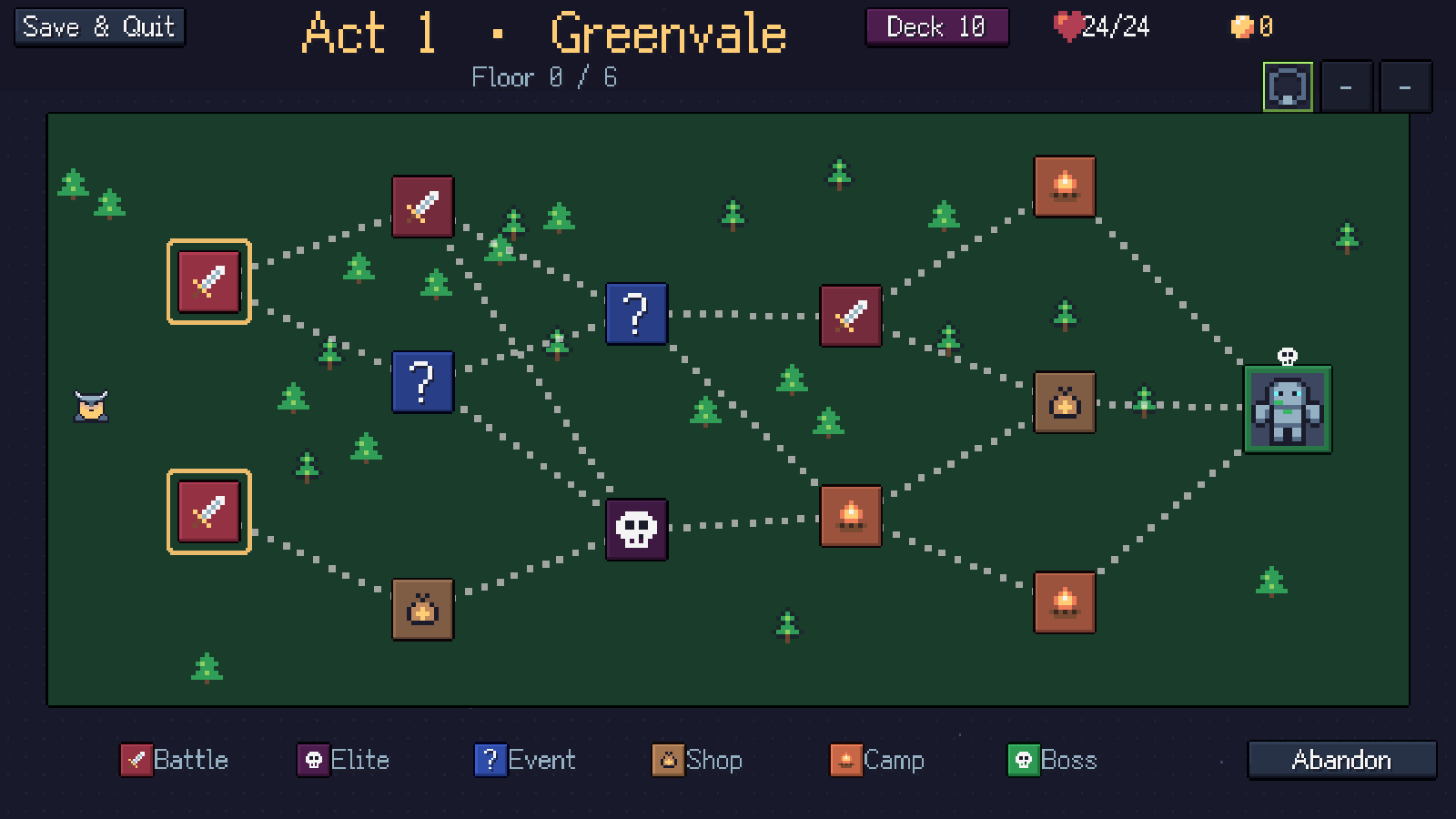
Cardfarer has two ways to use its four-lane card battles. Campaign is a sequence of encounters along a story route. Expedition is a roguelike run in which you choose a path, gather cards and equipment, and manage resources between fights. Start with Campaign if you are still learning; try Expedition when you want your decisions to shape a whole run.
What is Campaign?
Campaign follows the search for your missing father through three regions: Greenvale, Ember Canyon and Gravemoor. There are 16 duels, with different opponents and card rewards along the way.
The sequence gives you a useful learning loop: meet an opponent, see what its deck does, win a new card, and reconsider your own deck. You can focus on a particular encounter and what would help against it, rather than choosing among several map routes.
The regional bosses include the Stone Colossus, Elder Hydra and Lich Lord. Reaching a new opponent is also an opportunity to stop and read cards you have not seen before. If the attacks still feel hard to predict, use the four-lane beginner guide alongside your next battle.
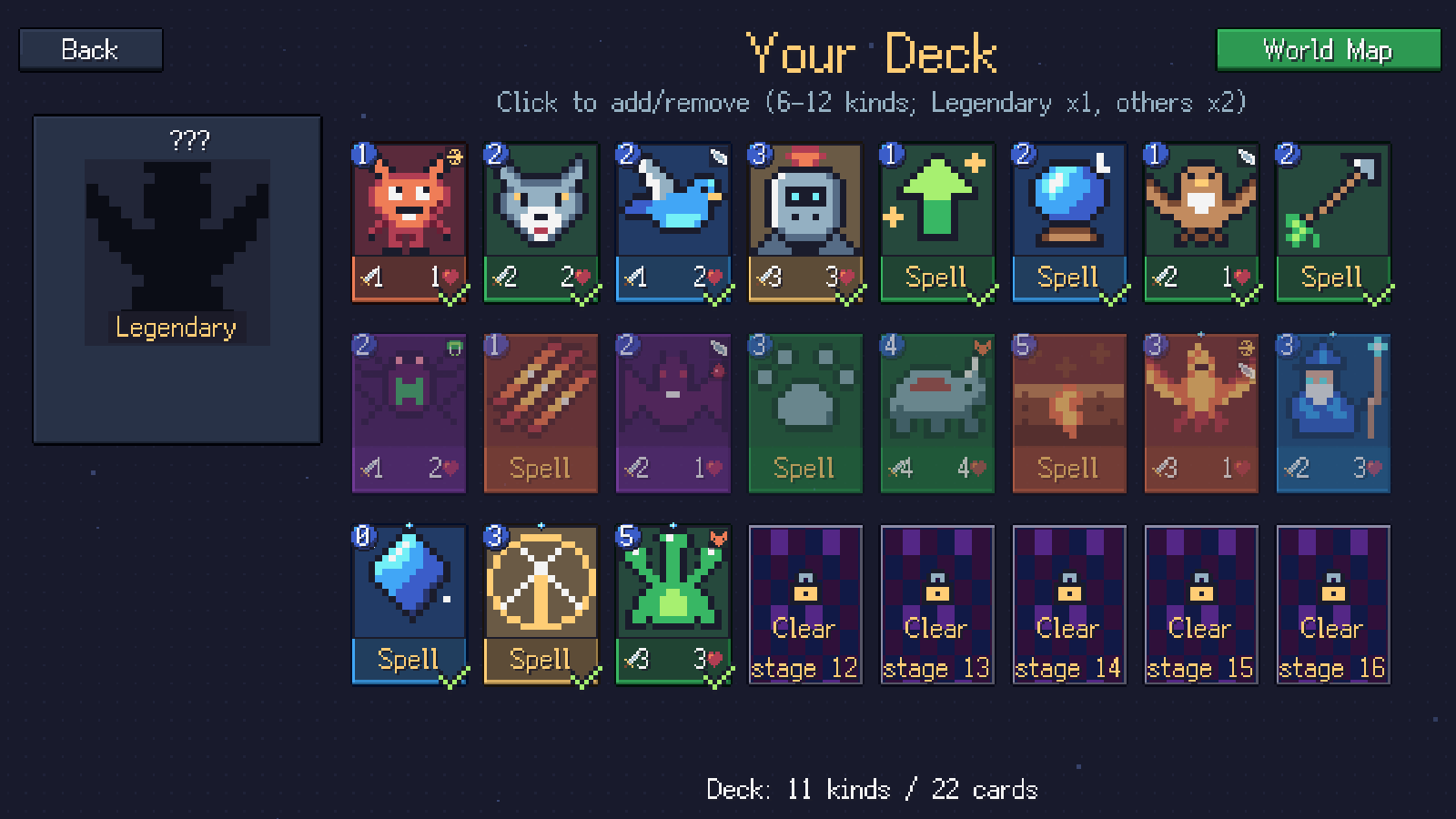
In-game capture: checkmarks identify selected cards; locked cards show the Campaign stage required to unlock them. Click to view full size.
How do I unlock Expedition?
Defeat the Stone Colossus, the boss of Greenvale, to unlock Expedition. You do not need to finish all 16 Campaign duels first.
If Expedition is still locked, continue the first region’s Campaign battles and check the locked mode’s message. This makes Campaign the natural starting point even if the roguelike mode is what first caught your attention.
What changes in Expedition?
An Expedition spans three acts on a branching map. Its nodes include normal battles, elites, events, shops, campfires and bosses. You begin with a class-based deck and change it during the run through rewards and other encounters.
The important shift is the time horizon of a decision. A play that wins the current battle while costing a lot of health may make the next stop more difficult. An equipment reward can also change which cards fit your plan, so read what an item does before choosing purely by rarity.
Health carries between ordinary fights. Campfires offer a choice between recovery and training a creature card. The useful choice depends on the board problems your deck can solve and how much health you have available for the route ahead.
How should I choose a route?
For an early run, ask three questions before selecting the next node:
- Can I afford another demanding fight? Check your current health and the enemies your deck has struggled against.
- What does my deck need? A cheap creature, an answer to a flyer, or a way to remove a defender may help more than another expensive threat.
- What am I giving up by taking this path? A shop is more useful when you have gold to spend; a camp can matter more when health is tight.
These are starting principles, not a fixed winning route. The available branches, your rewards and the current state of your deck all affect the decision.
What carries forward after a run?
Expedition awards Stardust that contributes to permanent unlocks, including additional gear and reward options. It also has a difficulty ladder that opens after your first successful Expedition. Those progression systems give later attempts more to explore; they do not replace learning how the lanes work.
Which mode should I play today?
Choose Campaign when you want the next story encounter or a focused battle to learn from. Choose Expedition when you want to build around changing rewards and make decisions across a longer sequence of encounters.
New to the game entirely? The browser quick start explains where to play and how to keep your save. You can also view Cardfarer’s screenshots and overview, or start playing on itch.io.